
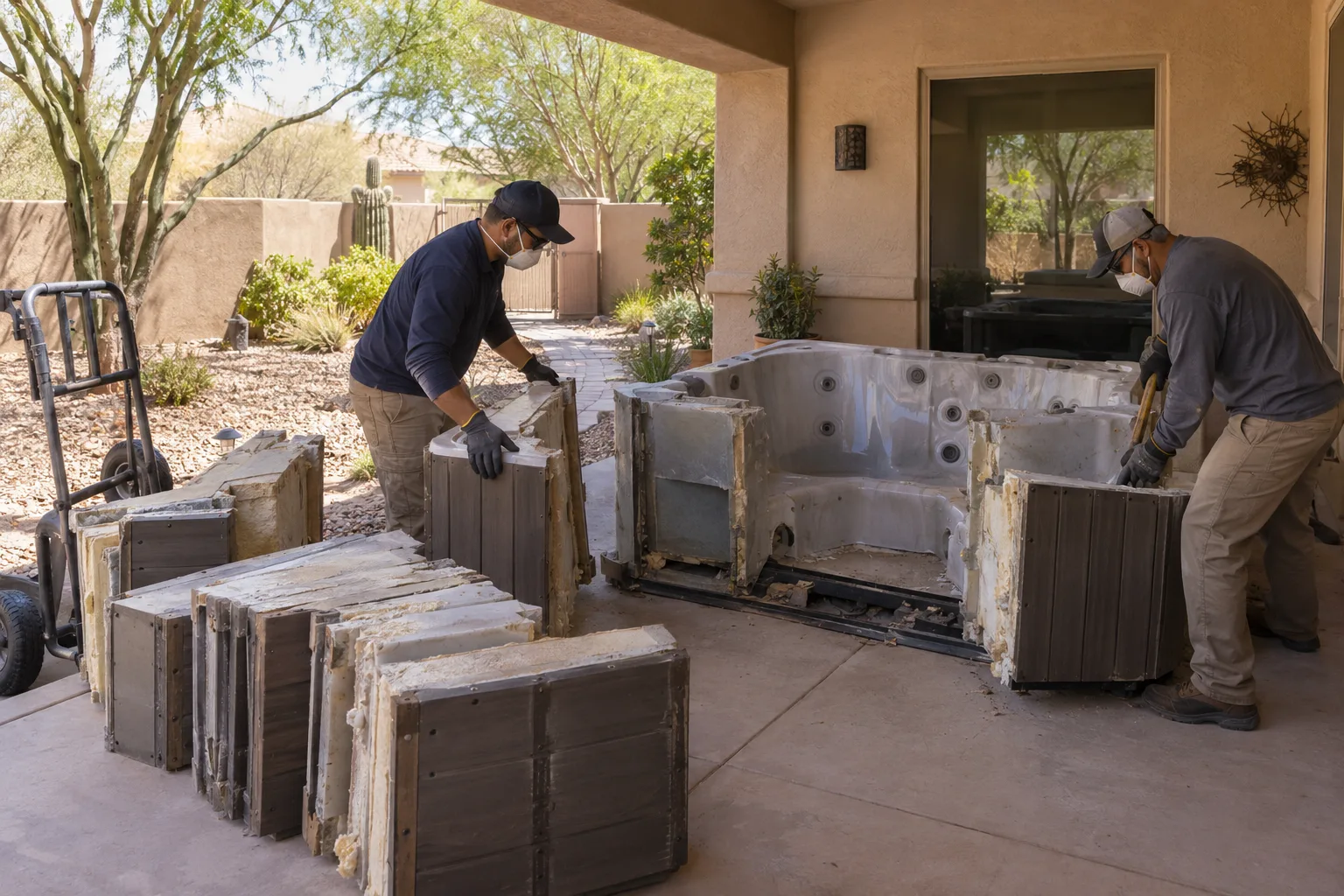
The tub is only half the job. Access, water, utilities, decks, and enclosures often decide how a hot tub can leave the property.
Make the tub empty and electrically safe
Follow the manufacturer and local wastewater guidance when draining. A qualified electrician should disconnect hardwired power when required. Shutoff alone is not the same as verified disconnection. Gas, water, and control wiring also need to be identified.
Measure a continuous route
Record the tub’s length, width, and height. Then measure every gate, passage, turn, step, and overhead obstruction between the spa and the loading point. Note whether pavers, artificial turf, a deck, or landscaping must be protected.
Access worksheet
| Measure | Record |
|---|---|
| Spa | Length × width × height |
| Narrowest gate | Clear width with hinges and latch |
| Tightest turn | Width before and after the corner |
| Steps | Count, width, and landing size |
| Overhead | Eaves, branches, wires, and covers |
| Loading point | Distance, slope, and parking limits |
Identify what is built around it
Photograph decks, privacy screens, gazebos, masonry, plumbing, and equipment cabinets. A portable spa sitting on a slab is different from a shell recessed into a deck. Do not remove structural pieces merely to reveal the tub.
Keep the water problem separate
A removal provider should not arrive to a full or contaminated spa without prior agreement. If the water contains chemicals, algae, or unknown material, ask the responsible local authority how it may be discharged.
The hot tub removal page explains the service boundaries and estimate factors.